Quick Answer
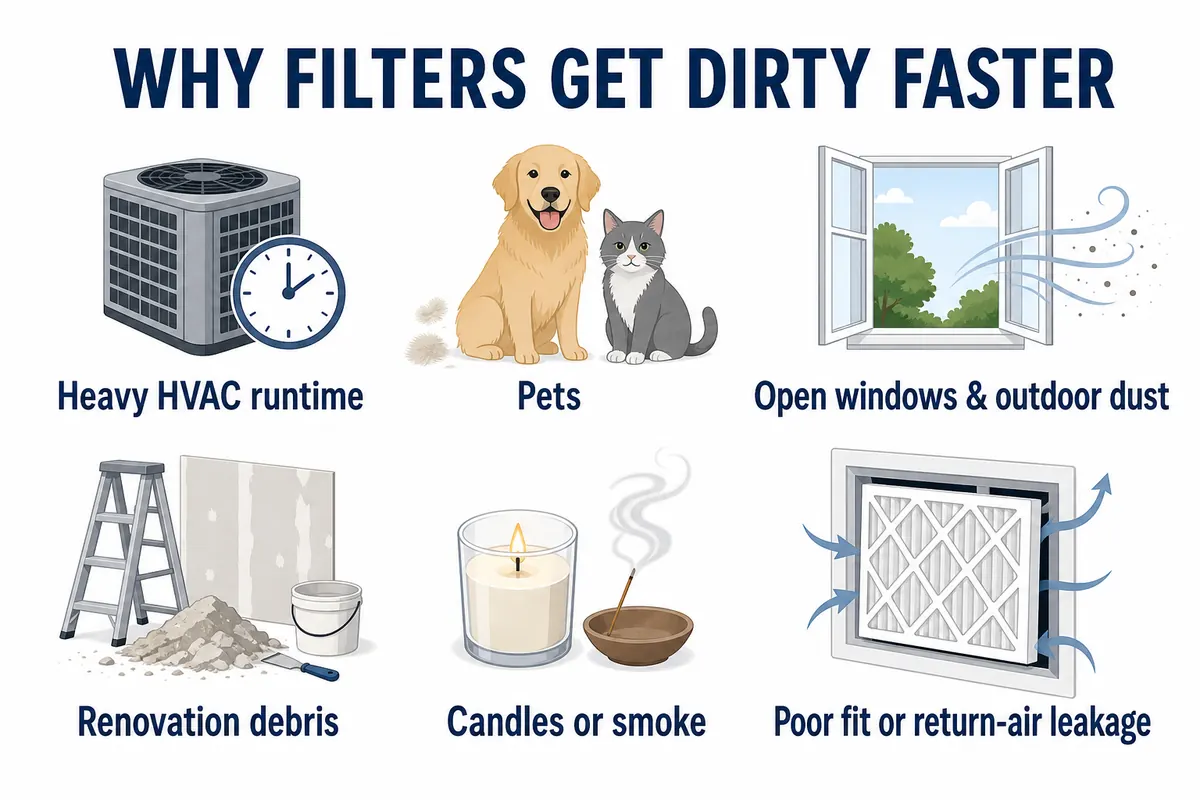
Your air filter may be getting dirty quickly because the HVAC system is running more often, the home has pets, windows are open, candles or smoke are producing particles, construction dust is present, or the filter does not fit correctly. Return-side leakage can also pull dust from unconditioned spaces.
A higher-MERV filter may collect more visible fine material than a lower-rated filter. A dirty-looking filter is not automatically clogged, and a dirty filter does not automatically mean the ducts need cleaning. Check how quickly it loaded, whether airflow changed, and whether the filter is properly sized, seated, and installed.
Free homeowner tool
Need help confirming your filter size and MERV rating?
Confirm the physical size first, then use Filter Wizard for cautious MERV guidance, replacement timing, and current retailer options.
Open the Filter Finder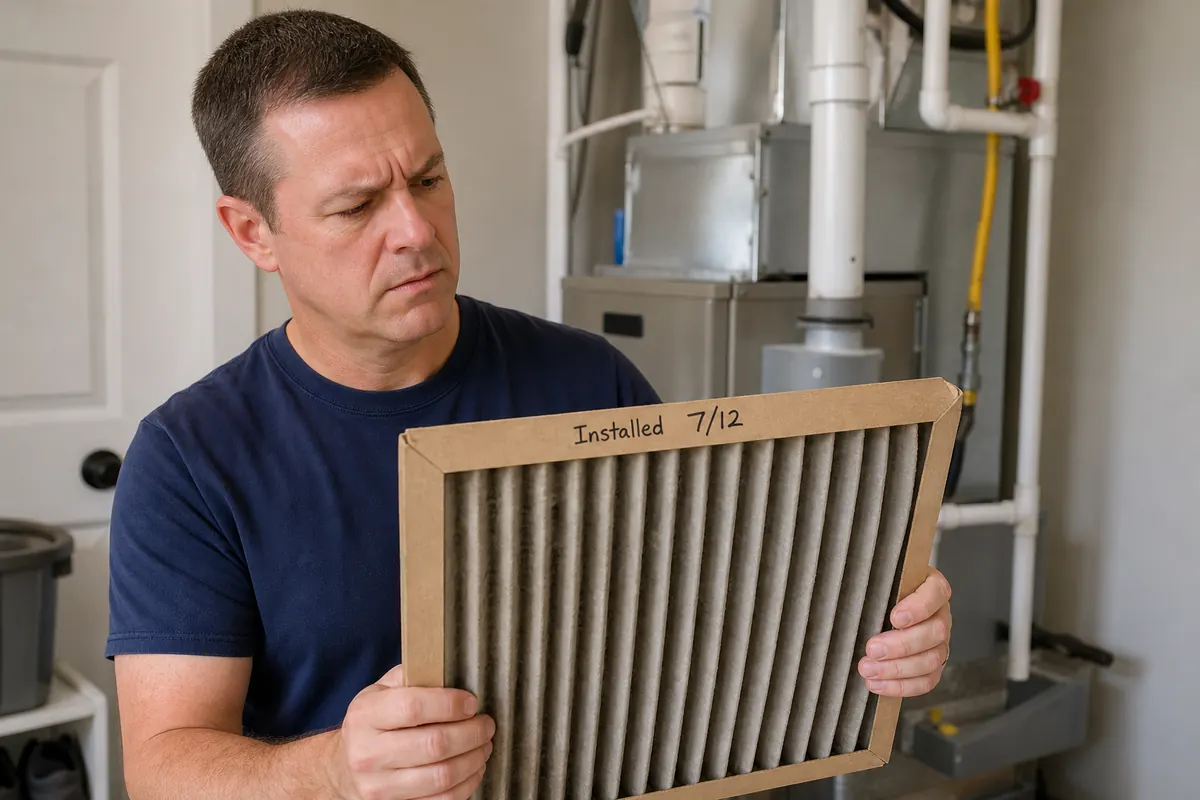
How Fast Is Too Fast for an HVAC Filter?
There is no universal number of days. A filter processes air only while the blower runs, so a month of mild-weather use can be very different from a month of continuous summer cooling or winter heating. Climate, equipment staging, thermostat settings, filter construction, occupancy, pets, and particle sources all affect loading.
A one-inch filter often has less total media area than a deeper media filter, although construction varies and a thicker filter belongs only in a cabinet designed for it. Face area matters too: a small filter handling substantial airflow may accumulate material across less surface. Homeowners should not modify a rack or force a deeper filter as a shortcut.
A gray surface can mean the filter is capturing particles normally. More meaningful warning signs include matted debris, pleats collapsing, a frame bowing inward, substantially weaker airflow, dampness, unusual odor, or a filter that becomes heavily clogged within days. Follow product and equipment guidance and compare the replacement with its actual condition. See how often to change an air filter for practical inspection intervals.
If a new air filter is dirty after one week but the system ran almost constantly during a heat wave, nearby construction was active, or several pets were indoors, the change may be explainable. If each replacement becomes severely restricted in a few days with no clear source, document the pattern and investigate further. When the main clue is hue rather than loading rate, use the brown-filter color and pattern guide.
Why HVAC Filters Get Dirty Fast: Causes at a Glance
| Possible cause | What you may notice | What to check | Likely next step |
|---|---|---|---|
| Heavy HVAC runtime | Even gray loading across the filter | Weather and recent blower runtime | Inspect more often during peak seasons |
| Pets or busy household | Hair, lint, and dust collecting faster | Pet areas and occupancy changes | Clean nearby surfaces and monitor |
| Open windows or outdoor dust | Seasonal pollen or fine dust | Smoke, road, lawn, or farm conditions | Adjust window use when conditions are poor |
| Renovation debris | Powdery or coarse material | Drywall, wood, insulation, or masonry work | Control dust at the source and inspect filter |
| Candles, fireplace, or smoke | Gray or dark fine particles | Combustion and cooking sources | Reduce sources and verify ventilation |
| Higher-MERV filter | More visible fine material | Rating, construction, thickness, airflow | Confirm equipment compatibility |
| Incorrect size or poor fit | Shifting, bowing, edge gaps | Length, width, thickness, rack fit | Install one correctly sized filter |
| Air bypass | Clean streaks or dirty edges | Frame seal and filter position | Correct fit without forcing the filter |
| Return-side leakage | Recurring dust from utility spaces | Accessible return connections and gaps | Consider professional inspection |
| Dirty return area | Localized hair or lint | Grille, rugs, bedding, laundry, litter | Clean accessible nearby surfaces |
| Limited filter face area | Fast loading across a small filter | Equipment documentation and cabinet | Do not alter the rack without assessment |
| Moisture or unusual dark material | Damp, greasy, odorous, or soot-like buildup | Water and combustion sources | Replace filter and investigate the source |
Household and Seasonal Causes of Fast Filter Loading
1. Heavy heating or cooling runtime
More runtime means more air passes through the filter. During extreme summer or winter weather, the blower may operate far longer than it did during a mild month, so the same filter can collect dust faster. High runtime alone does not prove the system is defective.
Pay attention when long cycles occur with weak airflow, unusual noise, or rooms that no longer condition normally. A heavily loaded filter can contribute to restriction, but it is only one possible cause. Review signs an HVAC filter is clogged, and remember that restricted airflow is only one of several reasons an AC coil may freeze.
2. Pets and household occupancy
Pets add hair, dander, tracked dirt, and activity that redistributes settled particles. More occupants also generally mean more clothing fibers, bedding lint, foot traffic, cooking, and open doors. A home with several pets may reasonably need more frequent filter inspections than a lightly occupied home.
Grooming pets and cleaning floors, upholstery, and bedding can reduce some debris, but it will not eliminate filter loading. A central filter also does not capture every pet-related particle or guarantee relief from allergy symptoms.
3. Open windows and outdoor particles
Open windows can bring in pollen, roadside or agricultural dust, wildfire-smoke particles, lawn-work debris, and material from nearby construction. Outdoor air may feel fresh while nature remains committed to entering the house uninvited. This does not mean windows should never be opened; it means outdoor conditions help explain a seasonal change.
Compare the filter timeline with local smoke, pollen, wind, road work, harvesting, and landscaping. Close windows when outdoor particle levels are visibly poor, then clean nearby sills and floors so deposited dust is not repeatedly stirred back into the return air.
4. Renovation and construction dust
Drywall sanding, wood cutting, insulation work, flooring installation, attic work, demolition, painting preparation, and concrete or masonry work can overwhelm an ordinary HVAC filter. Fine jobsite particles travel beyond the visible work zone and may load a new filter surprisingly quickly.
Isolate the work area where practical, use appropriate source dust collection, and avoid using the central HVAC filter as the primary jobsite dust collector. Inspect the filter during the project and replace it after heavy dust-producing work when condition warrants. Do not install an unusually restrictive filter without confirming the system supports it.
5. Candles, fireplaces, cooking, and indoor smoke
Candles, incense, smoking, fireplaces, wood stoves, heavy cooking, and oil or grease aerosols can add fine particles. Those particles may make the filter gray or dark, but appearance alone cannot identify the source. A particulate filter also does not remove every gas or odor.
Persistent soot-like buildup deserves attention to combustion sources and ventilation, especially when visible soot appears near vents or unusual odors are present. Use functioning carbon-monoxide alarms according to their manufacturer instructions, and seek qualified help for combustion or safety concerns rather than trying to diagnose equipment from a filter photograph.
Does a Higher-MERV Filter Get Dirty Faster?
A higher-MERV filter may appear dirty sooner because it captures a greater share of smaller particles that a lower-rated filter might allow through. That visible collection can mean the media is doing its intended job. It does not by itself prove the filter is clogged or the rating is wrong.
Pressure drop and service life are not determined by the MERV number alone. Thickness, pleat area, media design, face size, construction, brand, actual particle load, and the blower system all matter. Two filters carrying the same rating can behave differently. Compare MERV 8, MERV 11, and MERV 13 without assuming the highest number is universally best.
If airflow weakened after a rating change, confirm that the new filter is the correct size and seated properly, then check the equipment guidance. Do not diagnose the blower or select a lower rating solely from color. Use the lowest rating that reasonably meets household needs while remaining compatible with the system.
Incorrect Size, Poor Fit, and Uneven Loading
An undersized filter can shift, bow, or leave gaps that allow air to bypass the media. A filter forced into a slot can crush its frame or pleats. Nominal and actual dimensions may differ, so use the printed size from a properly fitting filter when available and follow the steps to find your HVAC filter size.
Confirm length, width, and thickness rather than using only two dimensions. A guide such as the 20 × 25 × 1 filter-size page or 16 × 25 × 1 filter-size page is relevant only after that nominal size is physically confirmed. Never choose a size because it is common.
Install the filter so the airflow arrow points toward the furnace, blower, or air handler. Orientation usually does not explain how many particles exist, but a correctly built directional filter should be installed as marked.
Why is the filter dirty on only one side?
Uneven loading can reflect the return-air pattern, filter position, rack geometry, a bowed frame, or bypass around an edge. A clean stripe beside a dark area does not establish duct failure. Check whether the filter fits securely, remains flat, has an intact frame, and is being pulled inward. Look for obvious accessible edge gaps without opening sealed panels.
If repeated filters deform or load severely in one area, document the pattern with dated photos. A professional can assess airflow and rack design rather than guessing from appearance alone.
Return-Side Leakage and Local Dust Sources
Leaks on the return side may pull dust from an attic, crawlspace, wall cavity, garage, or utility space. That extra material can contribute to rapid loading. Possible clues include visible gaps at accessible return connections, recurring debris near the rack, or a pattern that continues after normal household sources are addressed.
One dusty filter does not prove leakage. Do not crawl into unsafe spaces, disturb insulation, or dismantle ductwork. When inaccessible leakage is suspected, an HVAC professional can inspect the return path and determine whether testing or sealing is appropriate.
The immediate area around a return grille also matters. Rugs, litter boxes, pet bedding, laundry areas, workshops, unfinished rooms, and renovation debris can feed particles into the returning air. Turn the system off before opening an accessible grille, and clean the grille face and nearby surfaces without reaching into equipment or sealed duct sections.
Is the filter face too small for the airflow?
A small filter face handles the returning air across less area and may load faster. Deeper filters often offer more media area, but only when a compatible cabinet is installed. Homeowners should not stack filters, cut the rack, force a thicker product, or infer an engineering solution without airflow measurements and equipment guidance.
Why Is My Air Filter Black?
A black or unusually dark filter can contain candle soot, fireplace or smoking particles, heavy cooking aerosols, outdoor smoke, accumulated fine dust, or moisture-related discoloration. Filter material and lighting can also make a gray surface appear darker in a photograph.
A black filter does not automatically mean mold. Appearance alone cannot confirm mold, carbon monoxide, furnace failure, a cracked heat exchanger, or contaminated ducts. Those conclusions require other evidence and, in some cases, qualified testing.
Investigate further when dark buildup appears unusually fast, feels greasy, is damp, has an unusual odor, recurs after replacement, or appears with visible soot near vents. Replace a damp or heavily contaminated disposable filter. Address active moisture or combustion concerns promptly and use qualified professionals where appropriate.
Does a Dirty Filter Mean the Ducts Need Cleaning?
No. A dirty filter by itself does not prove that the duct system needs professional cleaning. Filters are supposed to collect dust. Runtime, pets, open windows, smoke, renovation debris, fit, and local return sources may explain the loading without a general duct-cleaning recommendation.
Visible substantial debris, confirmed pest activity, verified contamination, or documented system problems may justify professional evaluation. Assess sales claims cautiously and do not accept an unsupported cleaning interval based only on a gray filter. Start with the filter timeline, household sources, accessible fit, and airflow symptoms.
Step-by-Step Inspection Checklist
- Record when the filter was installed.
- Confirm the exact length, width, and thickness.
- Check that the airflow arrow points in the correct direction.
- Inspect whether the filter sits securely without being forced.
- Look for obvious gaps around the frame.
- Note whether loading is even or concentrated in one area.
- Consider recent heating, cooling, and blower runtime.
- Consider pets, extra occupants, open windows, candles, smoke, cooking, or renovations.
- Check whether airflow feels meaningfully weaker than usual.
- Replace a heavily loaded, damaged, wet, or collapsed disposable filter.
- Write the date on the replacement and monitor how quickly it loads.
- Contact an HVAC professional if rapid loading continues without an obvious household cause.
Keep homeowner work limited to accessible filter compartments and grille faces. Do not open sealed service panels, touch electrical components, or dismantle ductwork.
When Should the Filter Be Replaced?
Replace a disposable filter when it has heavy visible loading, matted debris, collapsed pleats, a bowed or weakened frame, dampness, damage, unusual odor, meaningful airflow restriction, or has reached the product or equipment interval. Heavy post-renovation loading is another reason to inspect and replace it sooner.
Appearance is one factor, not the only one. A lightly gray filter may still have useful service life, while a filter with a torn edge or large bypass gap needs attention even if much of its face looks clean. If the loaded filter contributed to longer HVAC runtime, replacement may help restore normal flow, but it does not guarantee lower bills or resolve every cause discussed in the dirty-filter energy guide.
Disposable filters should be replaced, not washed or vacuumed for reuse. Read when an air filter can be cleaned or must be replaced. Only a product explicitly labeled washable or reusable should be cleaned, and it must be dried completely according to its instructions.
When to Call an HVAC Professional
Professional evaluation is reasonable when rapid loading repeats without an obvious source; airflow stays weak after a correct clean filter is installed; filters repeatedly bow inward; coils repeatedly ice; the blower makes unusual noises; or visible return-side gaps are located in inaccessible areas.
Also seek help for recurring soot-like buildup, damp filters, suspected biological growth, unusual odors, or excessive debris apparently entering from an attic, crawlspace, garage, or wall cavity. These symptoms do not establish one diagnosis. They provide context a qualified technician can use while inspecting the actual system.
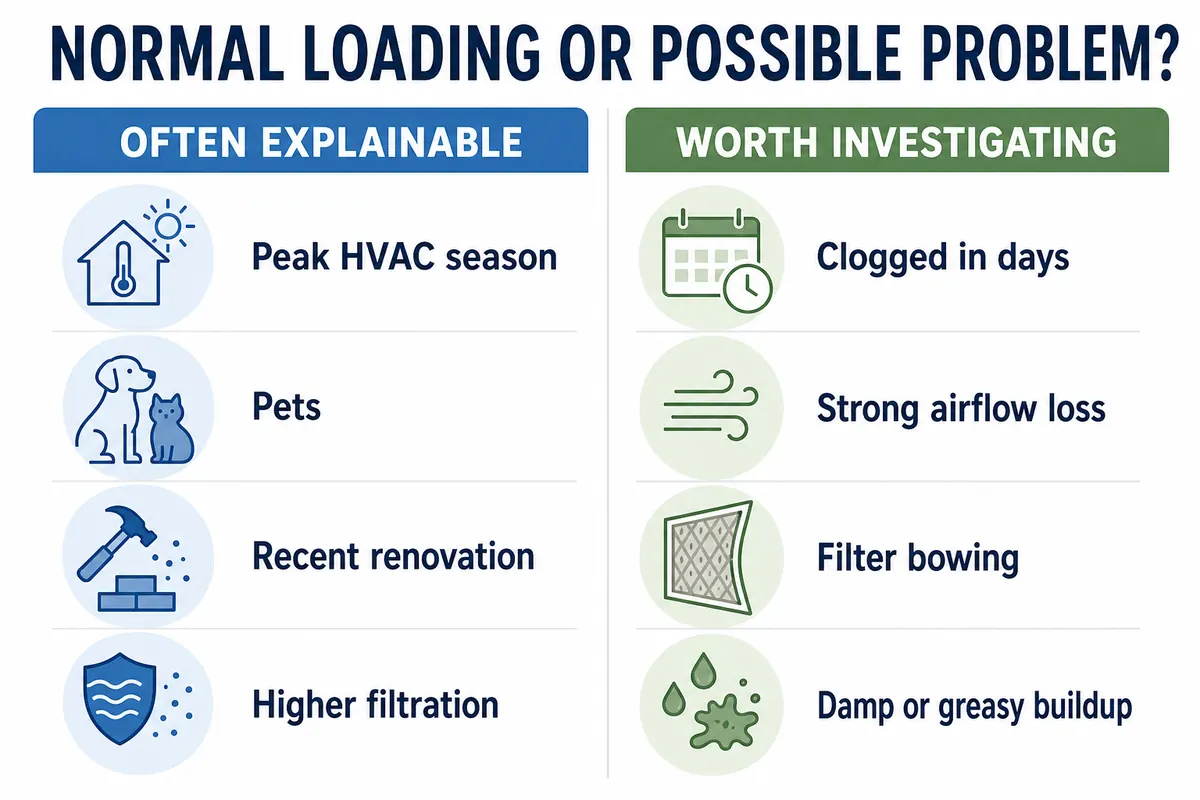
Normal Loading or Possible Problem?
Often normal or explainable
- Peak heating or cooling season
- Multiple pets or more occupants
- Recent renovation or nearby construction
- Open windows or seasonal outdoor dust
- Frequent candle, fireplace, or smoke exposure
- A compatible higher-efficiency filter capturing more material
Worth investigating
- Filter heavily clogged in only a few days
- Major airflow loss or repeated inward bowing
- Unexplained black, greasy, damp, or odorous buildup
- Rapid loading after every replacement
- Visible dust entering around return connections
Filter Wizard recommendation
Confirm fit, track the timeline, then choose a compatible replacement
Filter Wizard recommends confirming the exact size and airflow direction, recording the installation date, and inspecting condition during heavy-use periods. Use the Filter Finder for a cautious MERV starting point and replacement schedule; it cannot diagnose leaks or inspect equipment.
Open the Filter FinderFree Filter Reminders
Remember Your Next Filter Check
Get occasional filter reminders, homeowner maintenance tips, and buying guidance.
Occasional emails only. Unsubscribe anytime.
You're on the list. We'll send practical filter reminders and updates occasionally.
Frequently Asked Questions
Why is my air filter dirty after one week?
A filter can look dirty after one week during heavy HVAC use, renovations, smoke events, or in a busy home with pets. Confirm the installation date, fit, airflow, and recent household conditions. A filter that becomes heavily clogged in days deserves investigation.
Is it normal for an HVAC filter to get dirty quickly?
Sometimes. More runtime and more airborne particles mean faster loading. Normal depends on filter size, thickness, design, system use, season, and the household. Rapid recurring loading without an obvious cause is worth checking.
Does a dirty filter mean my ducts need cleaning?
No. A dirty filter shows that it captured particles, but it does not prove the ducts require cleaning. Household dust sources, runtime, filter design, fit, and return leakage should be considered first.
Why is my air filter black?
A dark filter may contain fine dust, candle or fireplace particles, cooking aerosols, smoke, or moisture-related discoloration. Appearance alone cannot identify mold, carbon monoxide, furnace failure, or a cracked heat exchanger.
Do higher-MERV filters get dirty faster?
A higher-MERV filter may look dirty sooner because it captures a greater share of smaller particles. Whether it clogs faster also depends on its thickness, media area, construction, brand, particle load, and HVAC compatibility.
Can pets make an air filter clog faster?
Yes. Pet hair, dander, tracked soil, and household activity can increase particle loading. Multiple-pet homes may need more frequent inspections, but no filter captures every pet-related particle.
Can open windows make my filter dirty?
Yes. Open windows can admit pollen, roadside or agricultural dust, smoke particles, and debris from lawn work or nearby construction. That does not mean windows must always stay closed.
Can construction dust ruin an HVAC filter?
Heavy drywall, wood, insulation, masonry, or demolition dust can load a filter quickly and may damage it. Isolate work and collect dust at its source rather than using the central filter as the primary jobsite collector.
Why is my air filter dirty on only one side?
Uneven loading may reflect airflow patterns, filter position, bowing, rack geometry, or air bypass around an edge. Check the size, orientation, frame condition, fit, and whether the filter is being pulled inward.
Can a filter get dirty because it is the wrong size?
The wrong size can shift, bow, leave bypass gaps, or become damaged. It may create uneven patterns rather than simply making the whole filter dirtier. Confirm length, width, thickness, and actual fit.
How often should I inspect my air filter?
Inspect it regularly and more often during peak heating or cooling, renovations, smoke events, or periods with extra pets or occupants. Use manufacturer guidance and actual condition rather than one universal calendar.
Should I replace a filter that looks gray?
A light gray appearance alone does not prove the filter is clogged. Replace it when loading is heavy, debris is matted, airflow weakens, the frame or pleats deform, it becomes damp or damaged, or its recommended interval is reached.
Can I vacuum a filter that gets dirty quickly?
Do not vacuum and reuse a disposable pleated or fiberglass filter. Vacuuming changes the surface appearance but does not reliably restore embedded media. Clean only filters explicitly labeled washable or reusable.
Can return-duct leaks make a filter dirty?
Return-side leaks can pull dust from an attic, crawlspace, garage, wall cavity, or utility area and contribute to faster loading. One dirty filter does not prove a leak; recurring evidence may justify professional inspection.
When should I call an HVAC professional?
Seek evaluation for repeatedly rapid unexplained loading, major airflow loss, filters bowing inward, recurring soot-like or damp buildup, unusual odors or blower sounds, repeated coil icing, or suspected inaccessible return leakage.
Does a dirty filter cause weak airflow?
A heavily loaded filter can restrict airflow, but weak airflow has other possible causes. Replace a loaded filter and seek professional help if airflow remains poor rather than treating filter appearance as a complete diagnosis.
If only one area loads rapidly, compare the filter loading pattern with visible gaps, fit, and nearby dust sources.