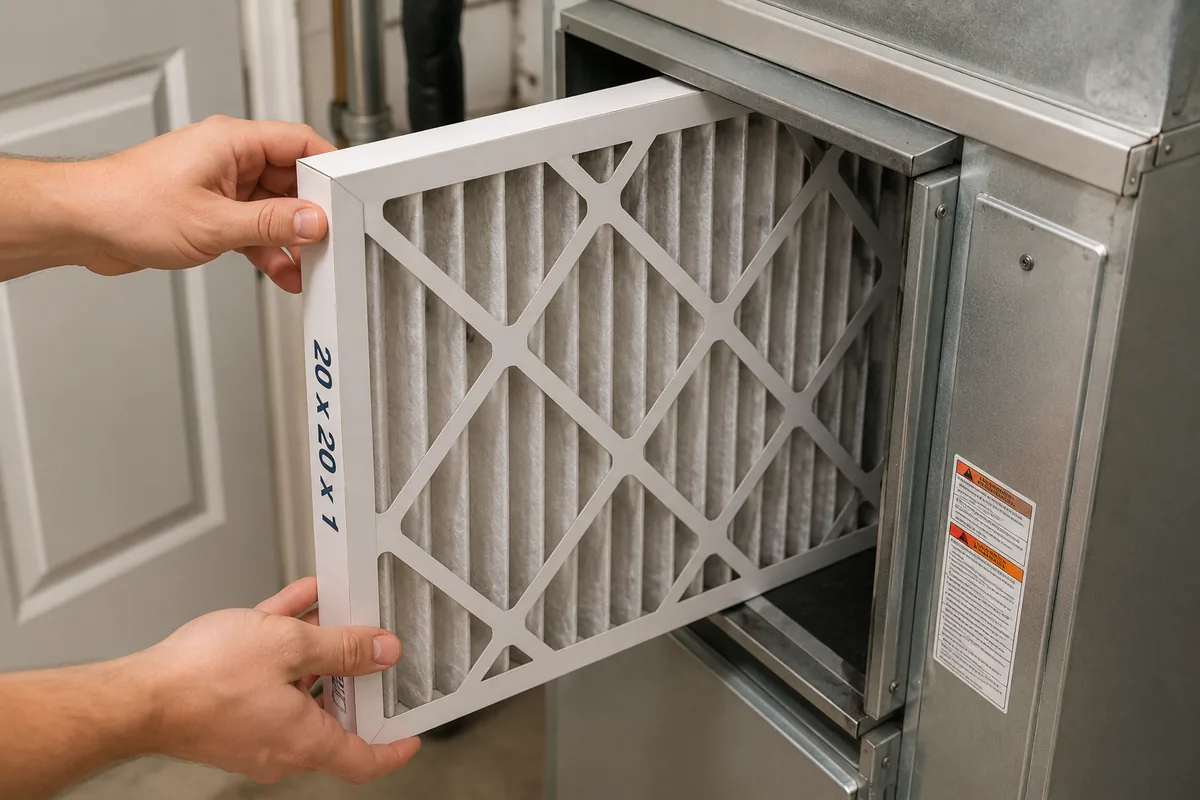
Quick Answer
If your home uses a standard 1-inch filter, a good starting point is every 60 to 90 days. Homes with pets, allergies, heavy dust, or frequent HVAC use usually need a shorter schedule.
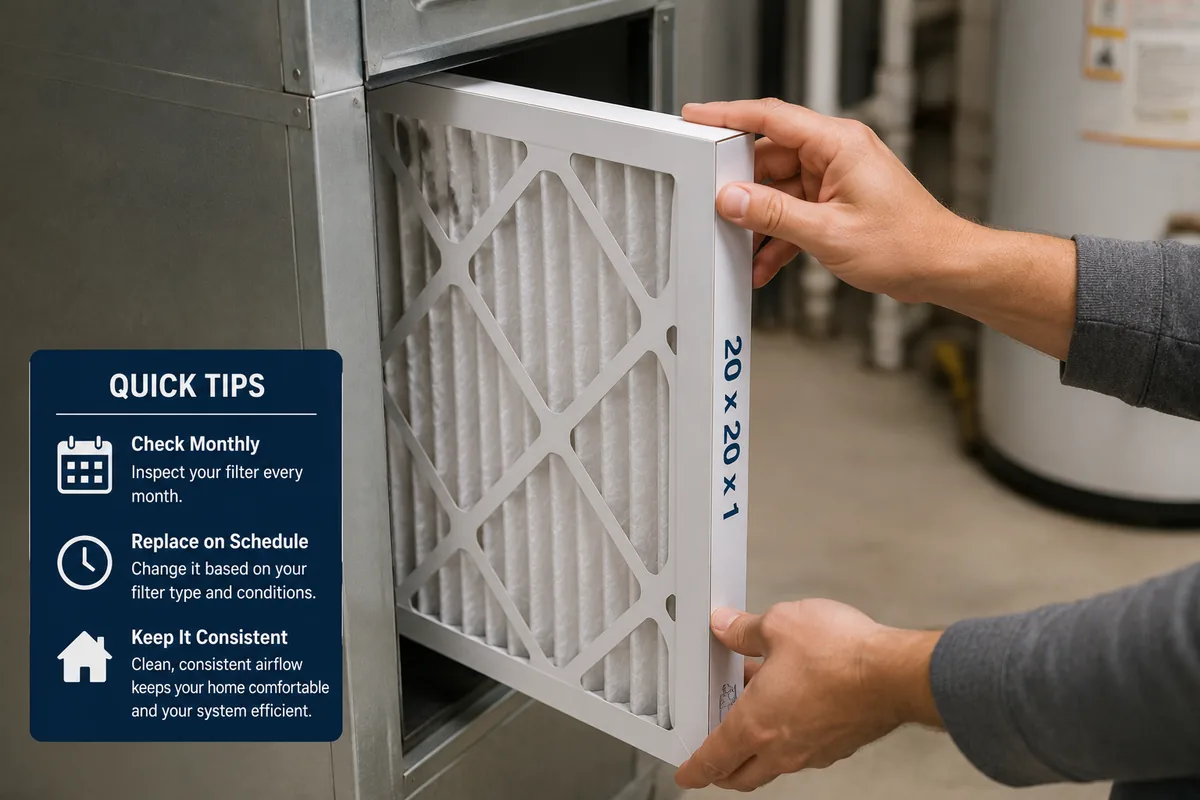
The safest habit is to check your filter monthly, even if you do not replace it monthly. A quick visual check tells you whether dust is building faster than expected and helps you avoid waiting until airflow already feels weak.
| Home Situation | Replace Filter |
|---|---|
| Single occupant | Every 90 days |
| Average family | Every 60 days |
| Pets | Every 30-60 days |
| Allergies | Every 30 days |
| 4-5 inch media filter | Every 6-12 months |
Why Air Filters Matter
Your HVAC filter does more than collect dust. It helps protect your heating and cooling equipment, supports steady airflow, and catches airborne particles before they continue moving through your home.
When a filter gets clogged, air has a harder time passing through it. That can make rooms feel less comfortable, force the system to run longer, and increase strain on the blower motor. A dirty filter can also let more dust settle around vents, furniture, and return grilles.
Think of the filter as a controlled doorway for air. A clean filter lets air pass through while catching particles. A clogged filter narrows that doorway. Your thermostat may still be asking for heating or cooling, but the system has to work against more resistance to move the same amount of air.
If the old filter has already been removed and no replacement is available, review what to do when a required HVAC filter is missing rather than treating the empty slot as a temporary operating mode.
Changing your filter on time is one of the simplest maintenance habits a homeowner can build. It does not replace professional HVAC service, but it helps your system breathe and makes it easier to keep your home comfortable.
It also reduces guesswork. When you know your size, rating, and schedule, filter replacement becomes a short routine instead of a small mystery every time you walk into a store or search online.
Signs Your Filter Needs Replacing
You do not always need to wait for the calendar. If your home shows these signs, check the filter sooner.
Vents feel weaker than usual or rooms take longer to cool or heat.
Dust gathers quickly near vents, shelves, or return grilles.
Sneezing, itchy eyes, or irritation feel worse indoors.
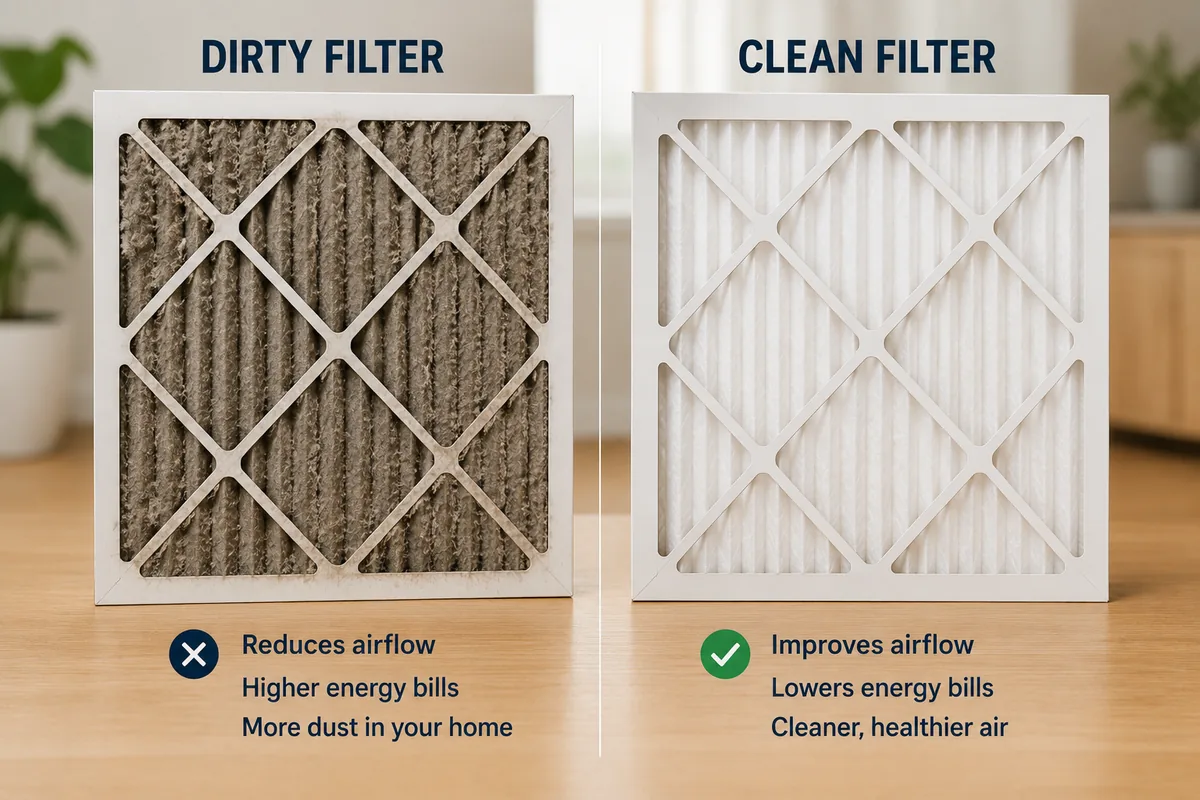
The filter face looks gray, clogged, or packed with debris.
The HVAC system cycles longer than normal to reach the set temperature.
A filter does not have to be completely black to be worth replacing. If the pleats are packed with dust, pet hair, or gray buildup, airflow is already being affected. In many homes, the filter looks "mostly fine" until you compare it with a clean replacement side by side.
Factors That Change Replacement Frequency
Pets
Pets add hair, dander, and extra dust to the home. If you have one pet, check the filter around every 60 days. With multiple pets or heavy shedding, every 30 to 45 days may be more realistic.
Homes with pets often benefit from setting a recurring reminder because filter loading is easy to underestimate. A clean home can still have a filter that fills quickly if the return air pulls in pet hair and dander every day.
Allergies
Allergy-sensitive homes often benefit from more frequent changes because filters load up with pollen, fine dust, and other particles. A monthly check is a smart habit during allergy seasons.
If allergies are the main concern, filter rating matters too. A higher MERV rating may help capture smaller particles, but it should be matched to what your HVAC system can handle. More filtration is useful only when airflow remains healthy.
Smoking
Smoke particles and odors can load a filter faster than normal household dust. If smoking occurs indoors, inspect the filter more often and consider whether a higher filtration option is appropriate for your system.
Construction Dust
Renovation work, drywall dust, sanding, flooring projects, and nearby construction can clog a filter quickly. During projects, check the filter every few weeks and replace it when it looks loaded.
Do not rely on your normal schedule during a remodel. Dust from sanding, cutting, demolition, or attic work can overwhelm a filter much faster than normal living conditions.
Vacation Homes
A home that sits empty with minimal HVAC use may not need the same schedule as a full-time residence. Still, check the filter before peak heating or cooling seasons, especially if humidity or dust is a concern.
Filter Thickness
Thin 1-inch filters usually need replacement more often. Larger 4- or 5-inch media filters hold more material and can often last 6 to 12 months, depending on the system and the manufacturer guidance.
Thickness is one reason generic advice can be confusing. A 1-inch filter in a busy family home and a 5-inch media filter in a lightly used system should not be treated the same. Always start with the size printed on the filter frame, then adjust the schedule based on real conditions in your home.
HVAC Runtime
The more your system runs, the more air passes through the filter. During very hot summers or cold winters, your filter may collect particles faster simply because the system is moving more air throughout the day.
If you are considering extra blower runtime specifically for filtration, compare AUTO, ON, and CIRCULATE fan modes before changing the thermostat setting.
Return Vent Location
Filters near high-traffic hallways, pet areas, laundry rooms, or dusty entryways may load faster. If your return grille is close to a source of dust or hair, inspect the filter more often than the package suggests.
Free Filter Reminders
Never Forget Your Next Filter Change
Get practical filter reminders, maintenance tips, and buying guidance delivered occasionally. No daily inbox clutter, because nobody needs another company emailing them before breakfast.
Occasional emails only. Unsubscribe anytime.
You're on the list. We'll send practical filter reminders and updates occasionally.
A Simple Replacement Routine
The easiest system is to pair filter replacement with a calendar habit you already remember. For example, check the filter on the first weekend of each month. If it still looks clean, leave it in place and check again next month. If it looks gray or packed with dust, replace it. If it remains unexpectedly clean over an extended period, use the guide to check why an HVAC filter may not look dirty without treating appearance as a diagnosis.
Write the installation date on the edge of the new filter before sliding it in. Many homeowners forget when the filter was last changed, and a written date removes the debate. You can also keep a photo of the filter size on your phone so you do not have to open the return grille every time you shop.
When installing the new filter, look for the airflow arrow on the frame. The arrow should point in the direction air moves toward the HVAC equipment, not necessarily toward the room. If you are unsure, check the old filter orientation before removing it or look for markings near the filter slot.
MERV Recommendation
MERV ratings describe how effectively a filter captures particles. Higher is not automatically better for every HVAC system because denser filters can increase airflow resistance. Always confirm your system's recommended maximum filter rating.
For many homes, MERV 8 is a practical default. Homes with pets, more dust, or a desire for stronger everyday filtration may consider MERV 11. Allergy-sensitive homes may consider MERV 13, but only after checking that the HVAC system supports that level of filtration.
Best for most homes
A practical everyday option for standard dust and normal household use.
Find MERV 8 OptionsBest for pets
A stronger option for pet dander, dust buildup, and higher filtration needs.
Find MERV 11 OptionsBest for allergies
Worth considering for allergy-sensitive homes after checking HVAC compatibility.
Find MERV 13 OptionsFree homeowner tool
Not sure which filter your home needs?
After you confirm your physical size, use Filter Wizard's free Filter Finder for cautious MERV guidance, a replacement schedule, and retailer search options.
- ✓ Correct size guidance
- ✓ Recommended MERV rating
- ✓ Replacement schedule
- ✓ Size-gated retailer searches
Frequently Asked Questions
Can I wait longer than 90 days?
Sometimes, especially in a lightly used home with a larger media filter. For most 1-inch filters in occupied homes, 90 days should be treated as an upper limit, not a guarantee.
Can a dirty filter damage my furnace?
A dirty filter can restrict airflow and make equipment work harder. It is not the only cause of HVAC problems, but it is one of the easiest maintenance issues to prevent.
Is MERV 13 always better?
No. MERV 13 can capture finer particles, but it may create more airflow resistance. Check your HVAC manufacturer's guidance before upgrading.
Can a dirty filter increase my electric bill?
It can. Restricted airflow may cause the system to run longer to move enough conditioned air through the home.
How do I know my filter size?
Look for printed dimensions on the cardboard edge of your current filter. The format usually looks like 20x25x1.
What happens if I install the wrong size?
A filter that is too small can leave gaps where air bypasses the filter. A filter that is too large may not fit safely. Confirm the printed size before ordering.
Should I change my filter more often in summer?
If your air conditioner runs frequently, yes, it is wise to inspect the filter more often during peak cooling season.
Do thicker filters last longer?
Often, yes. A 4- or 5-inch media filter usually has more surface area than a 1-inch filter, but you should still follow system and filter manufacturer guidance.
Can I vacuum and reuse a disposable filter?
Disposable filters are meant to be replaced. Vacuuming may remove surface dust, but it usually will not restore full filtration or airflow performance.
What if my filter still looks clean?
Check your schedule, home conditions, and HVAC usage. A clean-looking filter may be fine, but if airflow is weak or the system runs longer, inspect more closely.