Quick Answer
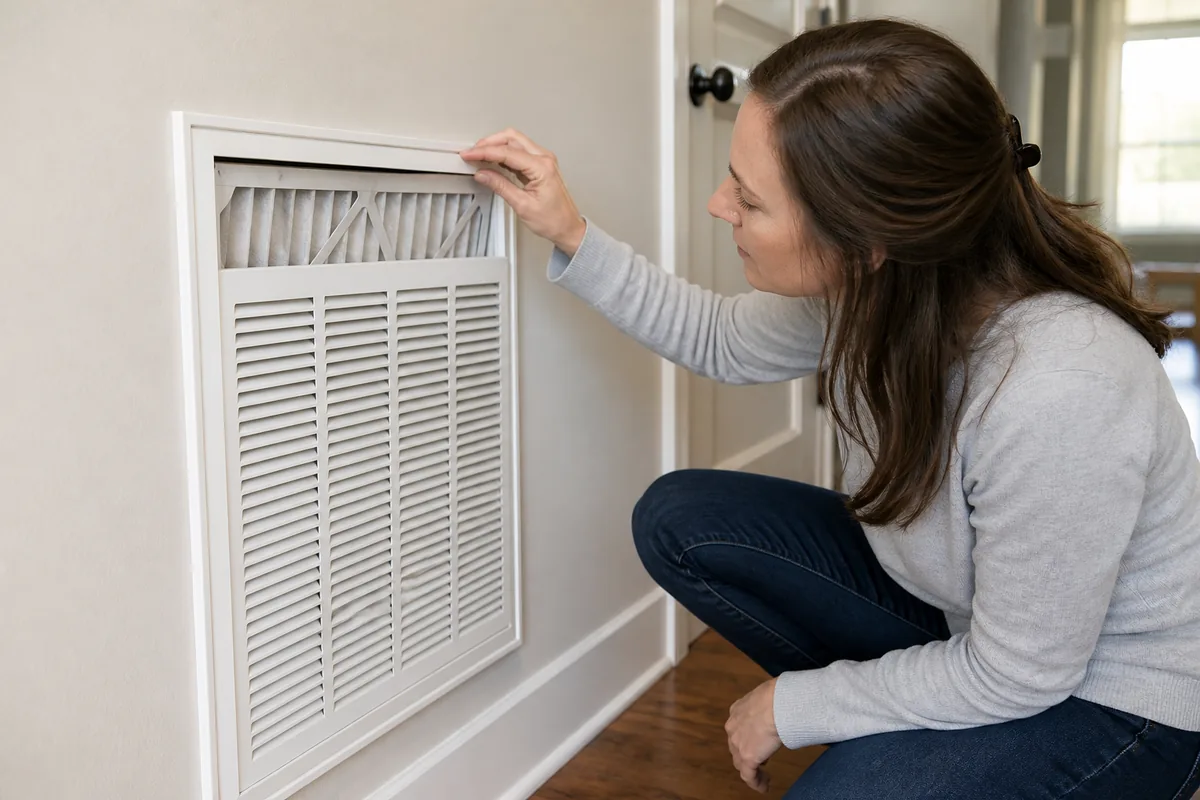
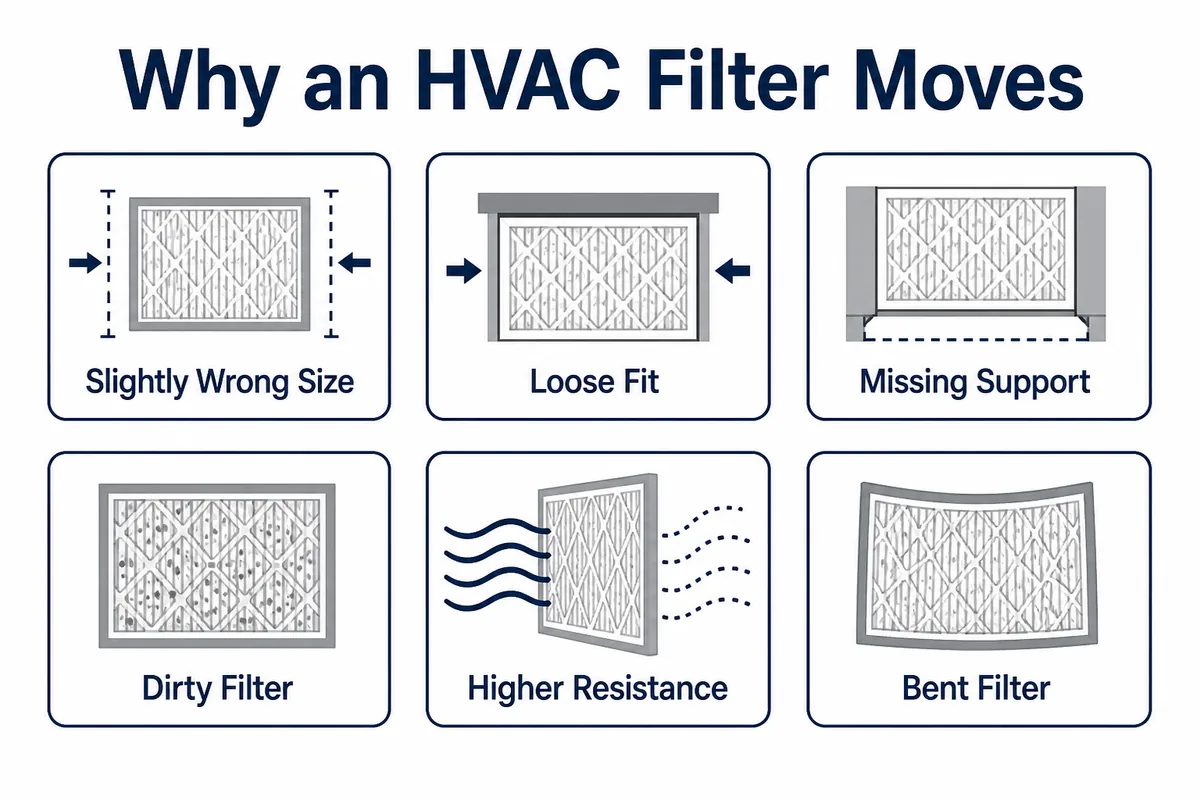
An HVAC filter may move when the blower starts because it is slightly undersized, loosely seated, poorly supported, heavily loaded, or exposed to a pressure difference across the return. Some small movement can occur in certain filter grilles, but repeated lifting, rattling, bowing, or shifting usually means the fit, support, or airflow conditions deserve closer attention.
Confirm the exact size, seating, condition, airflow direction, and supported MERV rating before assuming the blower or ductwork is the problem. Movement is a symptom, not proof of excessive suction or equipment failure. Use the separate guide to check whether the filter is too loose or too tight.
Is It Normal for an Air Filter to Move?
A brief flex or tiny motion can happen when a blower starts, especially in a large return grille where the filter rests against tabs. Airflow creates a pressure difference across the media, and a lightweight frame may react before settling.
The filter should still remain seated, supported, and aligned. Repeated lifting, dropping, rattling, sliding, or large movement is not ideal. Pay particular attention when the frame leaves its track, creates a visible gap, bows inward, or no longer returns to the correct position.
Severity and recurrence matter more than one tiny motion. A filter that barely shifts once is different from one that jumps every cycle or falls against the grille when the system stops.
Why an HVAC Filter Moves: Causes at a Glance
| Possible cause | What you may notice | What to check | Likely next step |
|---|---|---|---|
| Slightly undersized | Sliding or edge gaps | Printed and actual dimensions | Confirm intended size |
| Loose slot fit | Shifting at startup | Tracks and seating | Seat correct filter |
| Weak retainers | Lifting or dropping | Existing clips or tabs | Restore intended support |
| Poor rack support | Frame moves as a unit | Rails, door, geometry | Evaluate damaged rack |
| Heavy loading | Flexing, weak airflow | Dirt and replacement timing | Replace disposable filter |
| More restrictive filter | Movement began after change | MERV, media, depth | Verify compatibility |
| Bent filter | One edge pulls inward | Frame distortion | Replace damaged filter |
| Incorrect installation | Poor seating or tilt | Direction and track position | Reinstall correctly |
| Grille vibration | Buzzing or rattling | Grille and latch movement | Identify loose component |
| Persists when clean and correct | Repeated displacement | Rack and return airflow | Consider HVAC evaluation |
Several causes can overlap. A loaded filter that is also slightly small may move more than either issue would cause alone.
The Filter Is Slightly Too Small
An undersized filter has room to accelerate, lift, or rattle when airflow begins. Even a small edge gap can let air bypass the media. The result may be a filter that shifts in its slot, leaves a clean strip beside the frame, or drops when the blower stops.
Nominal and actual dimensions are not identical. Two filters labeled 20 × 25 × 1 may have slightly different actual measurements or frame stiffness. A replacement from another manufacturer can therefore feel looser even when the printed size matches.
The printed size on a properly fitting old filter is usually the best shopping reference. Use the guide to confirm your air filter size, and compare actual dimensions when changing brands. Do not trim a filter or force an oversized frame.
The Filter Is Loose in the Rack or Grille
Some slots naturally provide more clearance than others. Return grilles may depend on a hinged face, clips, springs, or small tabs to keep the filter against its seating surface. Furnace slots may use tracks and a filter door.
A correct filter should slide into place without being crushed, yet remain secure enough that normal airflow does not dislodge it. Check whether the frame is fully inside both tracks and whether an accessible door or latch is closed as designed.
Do not permanently tape a filter into equipment, stuff material around the frame, or improvise spacers. Those approaches can hide the real fit problem, interfere with replacement, or block an intended opening.
Retainers or Rack Support May Be Missing
Retaining clips, grille tabs, support rails, filter doors, and rack geometry keep the frame from lifting or being drawn inward. A missing clip or damaged rail can let even the correct filter move.
Inspect only accessible support parts with the system off. Look for an obviously loose clip, broken grille tab, open latch, bent track, or absent filter door. Do not remove blower panels, bypass safety doors, touch wiring, or fabricate metal supports.
If the rack or grille is damaged, the repair should restore the intended design rather than pinning the filter in place with a permanent workaround.
The Filter Is Dirty or Heavily Loaded
As dust accumulates, airflow resistance across the media increases. A heavily loaded filter may experience a larger pressure difference, which can contribute to flexing, vibration, bowing, or movement—particularly when fit or support is already marginal.
Replace a heavily loaded disposable filter. Do not vacuum it and put it back; the guide on vacuuming and reusing filters explains why surface cleaning does not restore disposable media. Review signs of a clogged HVAC filter and a practical filter replacement schedule.
Dirt alone does not prove why a filter moves. A clean replacement that stays seated is useful evidence, while repeated movement with the correct clean filter points back toward fit, support, or airflow conditions.
The Filter May Be More Restrictive Than the Previous One
A new filter can differ in MERV, media density, pleat design, depth, surface area, frame stiffness, and resistance. Movement that begins immediately after changing types is useful evidence, but it does not prove that MERV alone is responsible.
The guide to air filter restriction explains why the complete design matters. Compare the product label and system guidance, and use the MERV 8, 11, and 13 guide for cautious filtration choices. Do not automatically lower MERV without checking what the equipment supports.
If a correct clean replacement repeatedly shifts, bows, or accompanies weak airflow, have the rack and return airflow evaluated rather than guessing from the rating.
The Filter Is Bent or Bowed
A bowed frame may lose contact with a rail or retainer. Airflow can then pull one edge inward, let the filter rock in the slot, or open a bypass gap. Repeated movement can worsen distortion.
Replace a bent disposable filter instead of flattening and reusing it. The dedicated guide to why filters bend or bow inward covers loading, wrong size, support, installation, and resistance in more detail.
Why Does the Filter Move Only When the Blower Starts?
Blower startup creates a rapid pressure change across the return. A loose filter may lift, jump, or slide before the airflow becomes steady. A large grille face can flex slightly at the same moment, making the motion more noticeable.
Startup movement does not diagnose blower overspeed. First compare the filter’s size, seating, support, condition, and product type with the previous filter. Repeated jumping or displacement still deserves correction even if the filter settles afterward.
Why Does the Filter Drop When the Blower Shuts Off?
When the blower stops, the pressure holding a loose filter changes. Gravity can let the frame fall back against the grille, rail, or door. That repeated cycle may produce a thump or rattle.
The filter should remain properly supported while the system is off. If it visibly drops out of its intended seat, check the exact fit and existing retainers rather than accepting the movement as normal.
Why Does the Filter Rattle or Vibrate?
Rattling can come from clearance between the frame and track, a vibrating grille, a bent filter, or air passing through a narrow bypass gap. A small gap can create high local air velocity and make an edge flutter.
A whistle is a higher-pitched airflow sound; a rattle is usually contact or vibration. They can occur together. See why an air filter whistles for the related gap, loading, and resistance checks.
Can Movement Create Air Bypass?
Yes, if the movement creates gaps around the filter frame. Air can travel around the media instead of through it, reducing effective filtration. Dust may collect unevenly, and clean strips can remain beside a bypass path.
Uneven loading is a clue, not proof of one cause. The guide to a filter dirty on only one side explains how airflow patterns, fit, nearby sources, and bypass can produce different patterns.
Should You Replace a Moving Filter?
Replace a disposable filter when it is bent, torn, wet, heavily loaded, collapsed, or unable to sit flat. Also replace a wrong-size filter with the intended dimensions. Do not reuse damaged media merely because it is not old.
A clean, intact, correctly sized filter may simply need proper seating or an existing retainer restored. If a correct replacement still moves, avoid buying additional filters as a substitute for checking the rack and return conditions.
Safe Homeowner Inspection Checklist
- Turn the HVAC system off at the thermostat.
- Photograph the filter in place.
- Confirm the printed size.
- Check whether it fits securely without force.
- Look for gaps around the frame.
- Check accessible retaining clips for looseness or absence.
- Inspect for dirt, bending, moisture, tears, or collapse.
- Confirm the airflow arrow direction.
- Install a clean, dry, correctly sized replacement if needed.
- Restart the system and observe from a safe position.
- Note whether movement occurs only at startup or continues.
- Listen for rattling or whistling.
- Monitor whether the replacement stays seated.
- Arrange HVAC evaluation if movement persists with the correct clean filter.
Never run the system without a filter as a test. Do not remove service panels, alter ductwork, fabricate supports, bypass safety switches, or touch electrical components.
Free homeowner tool
Need help confirming the correct replacement?
Confirm the physical size first, then use Filter Wizard for cautious MERV guidance, replacement timing, and retailer options based on household conditions.
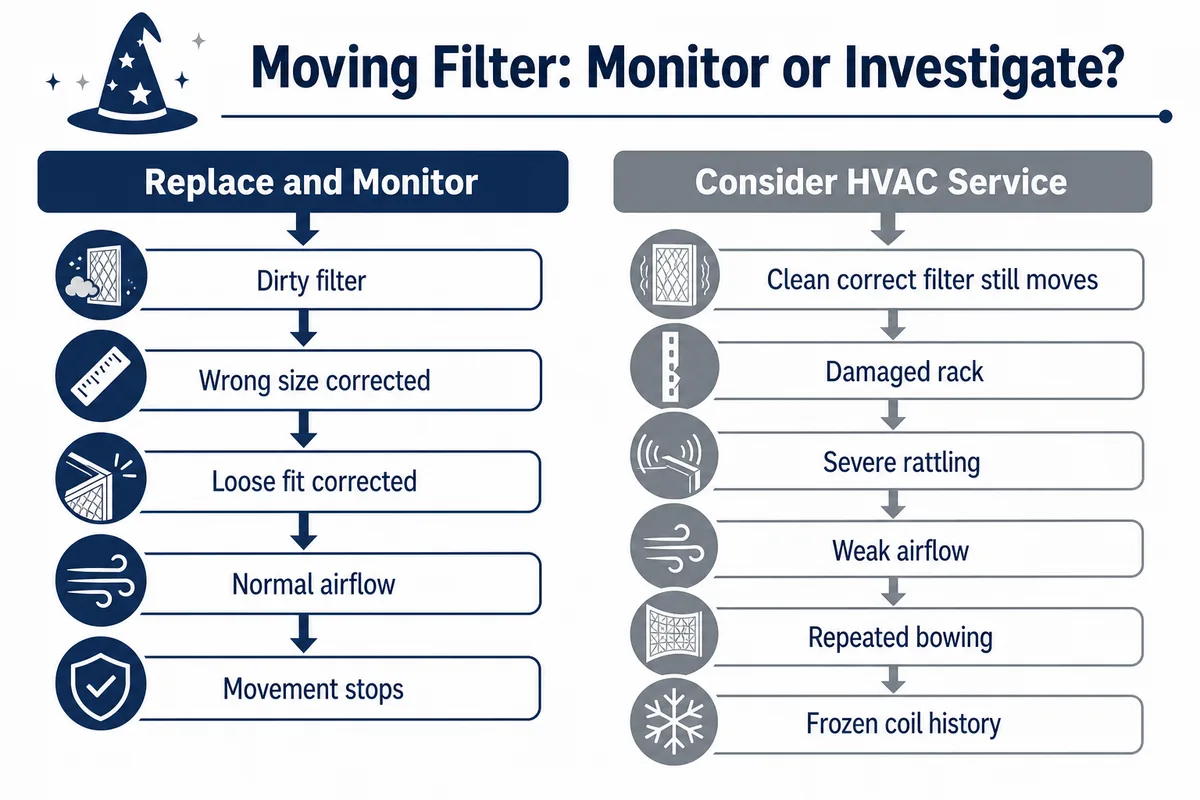
Open the Filter FinderReplace and Monitor or Call for Service?
Replace and monitor
- The current filter is dirty or bent.
- The wrong size was corrected.
- The loose filter is now properly seated.
- Movement stops with the replacement.
- Airflow feels normal.
- No whistling, freezing, or severe vibration appears.
Consider HVAC evaluation
- Clean correct filters repeatedly move.
- The filter lifts or drops out of position.
- The rack or grille is damaged.
- Weak airflow is present.
- Filters repeatedly bow.
- Severe rattling or whistling continues.
- Coil freezing recurs or the source is unclear.
Filter Wizard Recommendation
Filter Wizard recommends first checking the filter’s exact size, fit, support, condition, airflow direction, and MERV rating. Slight movement may occur in some return grilles, but repeated lifting, rattling, bowing, or shifting should not be ignored.
Replace damaged or heavily loaded disposable filters. If a clean, correctly sized filter still moves excessively, have the filter rack and return airflow evaluated. Movement does not automatically mean the blower is defective, and buying another filter cannot repair damaged support.
Filter Wizard recommendation
Confirm size and filtration before ordering
Enter a confirmed three-dimensional size for cautious MERV guidance, replacement timing, household-condition guidance, and current retailer options.
Open the Filter FinderFree Filter Reminders
Remember Your Next Filter Check
Get occasional filter reminders, homeowner maintenance tips, and buying guidance.
Occasional emails only. Unsubscribe anytime.
You're on the list. We'll send practical filter reminders and updates occasionally.
Frequently Asked Questions
Why does my air filter move when the HVAC turns on?
The blower creates a pressure difference across the return. A slightly undersized, loose, poorly supported, dirty, restrictive, or bent filter may lift or shift when that pressure appears.
Is it normal for a furnace filter to move?
A small brief flex can occur in some grilles, but the filter should remain seated and supported. Repeated lifting, dropping, rattling, or displacement deserves attention.
Why does my filter lift when the blower starts?
Startup creates a rapid pressure change. If the filter has clearance around its frame or weak support, it may lift before settling.
Why does my filter fall when the blower shuts off?
When airflow stops, the pressure holding a loose filter changes and gravity may let it fall back against the grille or rack.
Can the wrong filter size make it move?
Yes. A slightly undersized filter can shift, rattle, or leave bypass gaps even when its nominal label looks close to the intended size.
Can a dirty filter move more?
Yes. Heavy loading increases resistance and the pressure difference across the media, which can contribute to flexing or movement.
Can a restrictive filter cause movement?
It can contribute, but movement alone does not prove excessive restriction. Fit, support, loading, media, depth, airflow, and rack design all matter.
Why does my filter rattle?
Common causes include loose clearance, a vibrating grille, a bent frame, bypass air through a small gap, or movement against a track or retainer.
Can a bent filter move in the slot?
Yes. A distorted frame may lose support, shift against the rack, or open gaps around an edge. Replace a damaged disposable filter.
Can filter movement cause air bypass?
Yes, when movement opens gaps around the frame. Air can travel around the media and create uneven dirt or clean strips near an edge.
Should I tape the filter in place?
Do not permanently tape a filter into equipment or block intended openings. Use the correct filter and existing retainers; have damaged support evaluated.
Should I replace a moving filter?
Replace it if it is dirty, bent, torn, wet, damaged, or no longer sits flat. A clean intact filter may first need correct seating or restored existing support.
Why does a new filter move when the old one did not?
The replacement may differ in actual dimensions, frame stiffness, depth, media, pleat design, or resistance even when the nominal size matches.
When should an HVAC professional inspect a moving filter?
Seek evaluation when a clean correctly sized filter repeatedly moves, the rack is damaged, airflow is weak, severe rattling continues, filters keep bowing, or coil freezing recurs.