Air Filter Troubleshooting
Why Is My Air Filter Still Clean After Months?
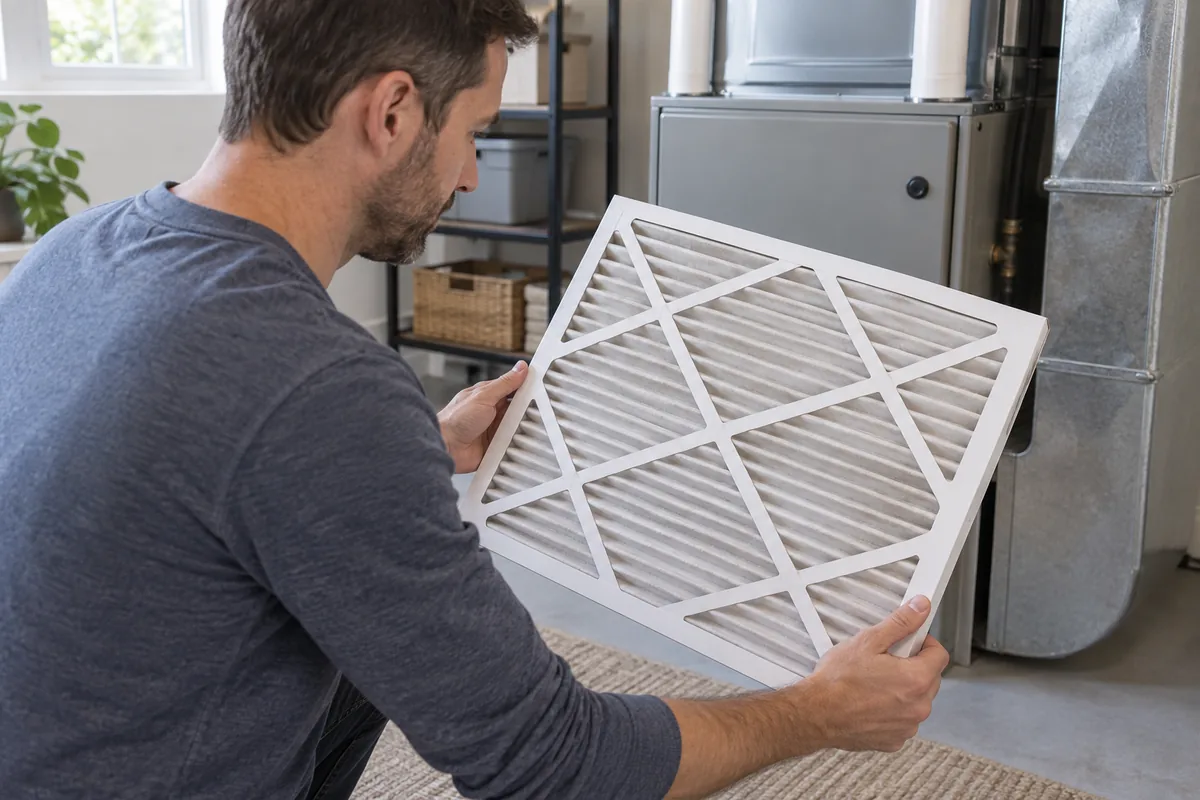
A clean-looking HVAC filter is not proof that the system is perfect—or that it has failed. Start with runtime, the actual filter location and configuration, and fit. Treat the filter's appearance as one observation, not as an airflow, efficiency, or indoor-air-quality test.
Quick Answer
An HVAC filter can remain relatively clean-looking because the system has run less, household particle loading is lower, the filter serves only part of the home, or a different filter is handling other return air. A poor fit can also allow air around the media, but a clean filter does not prove bypass or an airflow fault.
Confirm how much the system has actually operated, that you are checking the right filter, whether the home has multiple filters or systems, and that the filter is the correct size and seats normally. Keep following the filter and equipment guidance even when the media does not look dramatically dirty.
Is It Normal for an HVAC Filter to Still Look Clean?
Sometimes. There is no universal date by which an HVAC filter must turn gray. Carrier's residential replacement guidance says the appropriate schedule varies with filter type, household conditions, and system usage. It also recommends checking more often during peak heating and cooling periods, when the equipment runs more.
That variability makes “after months” a useful homeowner observation but not a technical threshold. A lightly used system in a lower-particle home may load a filter more slowly than a system that runs for long periods in a home with pets, smoke, construction dust, or other particle sources.
The opposite conclusion is unsafe too: white-looking media does not prove that the filter is working perfectly. The correct response is to verify the few things a homeowner can check safely, then consider professional evaluation when heating, cooling, or airflow is abnormal.
Why an Air Filter May Stay Cleaner Than Expected
1. The HVAC system has operated less
A central filter loads only while return air moves through it. Milder weather, thermostat changes, time away from home, or another heating or cooling source can reduce system operation. That can reduce visible loading without indicating a fault.
Keep this qualitative. A filter's color cannot reveal fan hours, airflow in cubic feet per minute, or how much material it captured. Use thermostat history if available and your actual operating pattern—not an invented dirt-per-day rule.
2. Household particle loading is lower
Filter service conditions differ among homes. Carrier identifies pets, smoking, renovations, filter type, and system usage as factors that can change replacement needs. Fewer occupants or particle-generating activities may leave less visible material for the central filter to collect.
That does not mean the indoor air is “clean,” allergen-free, or healthy. A filter photograph is not an air-quality test, and many particles are too small or too lightly colored to create a dramatic visual change.
3. The filter serves only part of the airflow or home
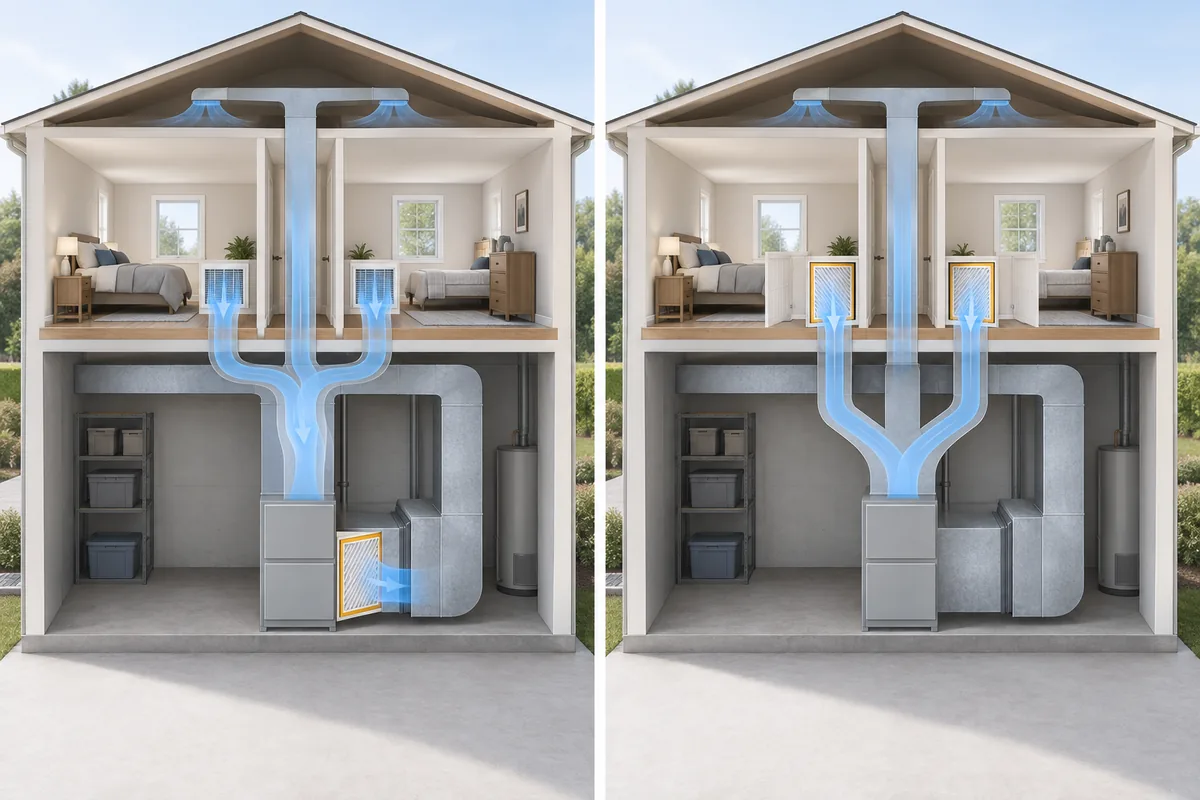
Filter location varies. Trane documents filters at an air handler, beside the equipment, or at return grilles; it also notes that homes with multiple HVAC systems have multiple filters. A filter serving one zone or system may remain cleaner than one handling more runtime or a dustier part of the home.
This is a configuration check, not permission to add or remove filters. If you are unsure which returns and equipment a filter serves, use the guides to understand return-filter configurations and check for filters at a return and the equipment. Follow the actual system design.
4. The filter does not fit or seal as intended
The DOE/PNNL Building America guidance calls for the filter media box and access cover to fit and seal so air follows the intended path. An undersized, damaged, or poorly seated filter can leave gaps where some air bypasses the media.
A clean filter does not prove bypass. It simply makes correct size and seating worth checking. Do not use tape, cardboard, foam, stacked filters, or a crushed replacement to create a homemade seal.
Check Whether You Are Looking at the Right Filter
Start with accessible locations and documentation. A central forced-air filter may sit in a rack near the furnace or air handler, inside a documented accessible compartment, or behind a return grille. Some homes have several return-grille filters; homes with more than one HVAC system normally have separate filtration for each system.
- Confirm the equipment that has been running. If the home has upstairs and downstairs systems, identify which thermostat and filter belong together.
- Check documented filter locations. Review the equipment manual, installer notes, old filter labels, and accessible return grilles.
- Look for more than one legitimate filter. Do not assume the first filter found handles all return air.
- Do not change the design. Never add a filter to every return or remove an existing filter based only on appearance.
If furnace and AC terminology is part of the confusion, the guide to furnace filters versus AC filters explains when central heating and cooling share the same filter path.
Check Whether the Filter Fits the Slot Correctly
A properly selected filter should sit in its intended rack without being crushed, folded, or surrounded by an obvious gap. Verify all three nominal dimensions printed on the frame and compare them with the documented requirement. If the old label is missing, confirm the HVAC filter size before buying a replacement.
The guide to how tightly an air filter should fit owns the detailed seating question. The goal is normal insertion and coverage of the intended opening—not a friction fit so tight that the frame bends.
What a Clean-Looking Filter Cannot Prove
- Airflow: appearance cannot measure CFM, static pressure, blower performance, or duct leakage.
- Filter efficiency: a pale filter is not proof that it captures nothing, and a dark filter is not proof of better efficiency.
- Indoor air quality: visible loading does not measure allergens, fine particles, smoke, gases, odors, or mold.
- Correct configuration: appearance alone cannot tell you whether another filter exists or whether every intended return path is covered.
- Equipment condition: it cannot diagnose a blower, duct, refrigerant, heating, or control problem.
If air at accessible supply registers seems abnormally weak, rooms are not heating or cooling normally, or the equipment cycles strangely, treat that performance symptom separately. The filter may be one check, but the clean appearance is not a diagnosis.
Likewise, do not assume a backward arrow caused the clean appearance. Install the filter in its documented direction; use the air-filter arrow guide if the orientation is unclear.
Should You Replace a Filter That Still Looks Clean?
Use the manufacturer's filter and equipment guidance plus a regular inspection schedule. Do not wait indefinitely for obvious discoloration, and do not invent a universal rule that every pale filter is ready for disposal. Product depth, construction, system use, and household conditions affect service intervals.
The complete guide to how often to change an air filter owns replacement timing. It explains why calendar guidance is a starting point and why airflow or system symptoms deserve attention even when appearance seems mild.
When an ordinary compatible replacement is due, verify the physical size first. The Filter Finder can then provide cautious MERV and replacement guidance; it cannot identify your configuration or diagnose why a filter stayed clean.
Free homeowner tool
Size and Configuration Confirmed?
After you verify the correct filter location and all three physical dimensions, use Filter Wizard for a cautious MERV starting point and replacement guidance.
Open the Filter FinderWhen an Unusually Clean Filter Deserves More Attention
Ask a qualified HVAC professional for help when you cannot determine the actual filter location or configuration; documentation conflicts with what you find; the correct filter does not seat normally; airflow at accessible supply registers seems unusually weak; or heating and cooling performance remains abnormal.
Service is also appropriate for repeated shutdowns, short cycling, unusual noises, burning or electrical odors, gas or combustion concerns, or any situation that would require opening sealed equipment or working near live parts. Do not change blower settings, probe wiring, bypass switches, remove required panels, modify ductwork, or operate equipment in an unsafe condition to investigate filter appearance.
Filter Wizard Recommendation
Do not grade an HVAC system by filter color. Confirm system runtime, the correct filter location, the number of filters and systems, the required size, and normal seating. Continue following documented replacement guidance even when visible loading is modest.
If the basics are correct and the HVAC system performs normally, a relatively clean-looking filter may simply reflect lighter service conditions. If comfort, airflow, cycling, or safety concerns are present, evaluate those symptoms directly instead of trying to diagnose them from the filter.
Frequently Asked Questions
Is it normal for an HVAC filter to stay clean?
It can be. Filter type, household particle conditions, and how much the system has operated all affect visible loading. If the appearance is unexpected, verify the correct filter location, configuration, and fit rather than treating cleanliness alone as proof of a problem.
Why isn't my furnace filter getting dirty?
Possible explanations include limited system runtime, lower particle loading, checking a filter that serves only part of the home, another filter or HVAC system handling other airflow, or air bypassing a poorly fitted filter. None can be diagnosed from appearance alone.
Does a clean filter mean no air is passing through it?
No. A clean-looking filter is not an airflow meter. Confirm normal system operation and accessible supply airflow, but use equipment documentation or qualified service for an airflow problem rather than diagnosing it from filter color.
Does a clean HVAC filter mean the indoor air is clean?
No. Visible filter color does not measure indoor particles, allergens, smoke, gases, odors, or mold. It cannot establish that indoor air quality is healthy.
Should I replace an HVAC filter that still looks clean?
Follow the filter and equipment guidance and your established inspection schedule rather than waiting for dramatic discoloration. Different products and homes have different service intervals, and some captured material may not be obvious by sight.
Can air bypass an HVAC filter?
Yes. A filter or rack that does not fit and seal as intended can allow some air around the media. A clean filter does not prove bypass, but correct size and normal seating are sensible checks.
Can a home have more than one HVAC filter?
Yes. Some systems use filters at multiple return grilles, and homes with multiple HVAC systems typically have filters for each system. Do not add or remove filters until the actual configuration is verified.
Can the wrong filter size make a filter stay clean?
An undersized or poorly seated filter can leave gaps that permit bypass, but appearance alone cannot establish that this is happening. Verify all three nominal dimensions and use the filter arrangement specified for the system.
Does running the HVAC less keep the filter cleaner?
Generally, less system operation means less return air passes through the filter, so less loading may be expected. There is no universal runtime-to-dirt formula, and filter appearance cannot reveal actual operating hours.
Questions or feedback?
Help Improve Filter Wizard
Tell us what was clear, what was missing, or which air-filter question you want answered next.