Quick Answer
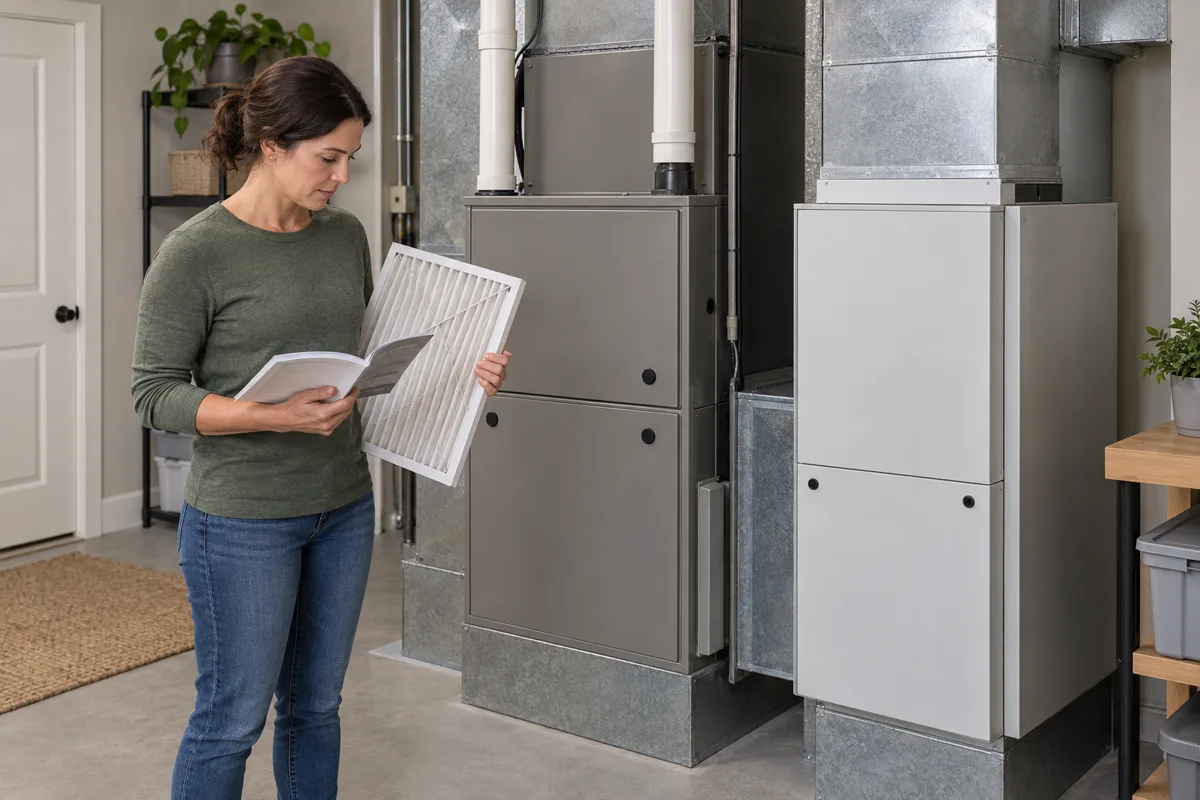
Do not assume a true HEPA filter can replace the ordinary filter in a standard residential furnace or central HVAC rack. True HEPA is a defined particle-filtration category, not a synonym for MERV 13 or for any thick pleated filter. The exact filter, cabinet, sealing, airflow, product pressure drop, blower, and system design must work together.
Some homes can use purpose-built whole-house HEPA equipment, including dedicated or bypass arrangements. That is different from pushing HEPA media into an existing slot because the face dimensions appear close. Check the equipment and filtration documentation; when compatibility is not explicit, ask the manufacturer or a qualified HVAC professional before changing the filtration type.
What Does “HEPA” Actually Mean?
HEPA describes a tested particle-removal performance. The U.S. Environmental Protection Agency explains that the U.S. Department of Energy definition requires a HEPA filter to remove at least 99.97% of airborne particles at 0.3 micrometers under the relevant test. That size is used because it is near the most penetrating particle size for the filter—not because HEPA captures only particles of exactly 0.3 micrometers.
Terms such as “HEPA-type,” “HEPA-style,” or “HEPA-like” do not, by themselves, establish that a product meets the HEPA definition. Neither does an image of dense white media. Verify the manufacturer's actual performance claim and test basis rather than treating similar-looking filters as equivalent.
HEPA also says nothing by itself about whether a product fits your furnace rack, seals against its cabinet, or works within the HVAC system's airflow requirements. Filtration performance and installed compatibility are separate questions.
Is HEPA the Same as MERV 13?
No. MERV 13 is not HEPA. Minimum Efficiency Reporting Value, or MERV, classifies filters under a different test framework across several particle-size ranges. HEPA has its own performance definition. A homeowner should not use an internet conversion chart to turn “HEPA” into one MERV number and then assume equal performance or system compatibility.
This distinction does not make MERV 13 inadequate or HEPA universally better. The EPA's residential guidance commonly points homeowners toward MERV 13—or the highest efficiency the actual fan and filter slot can accommodate—for central HVAC filtration. That is ordinary system-aware advice, not a declaration that MERV 13 becomes HEPA.
If your system uses conventional residential filters, the guide to MERV 8, MERV 11, and MERV 13 owns that selection decision. This page addresses the separate question of integrating true HEPA filtration.
Why a True HEPA Filter May Not Be a Drop-In Furnace Filter
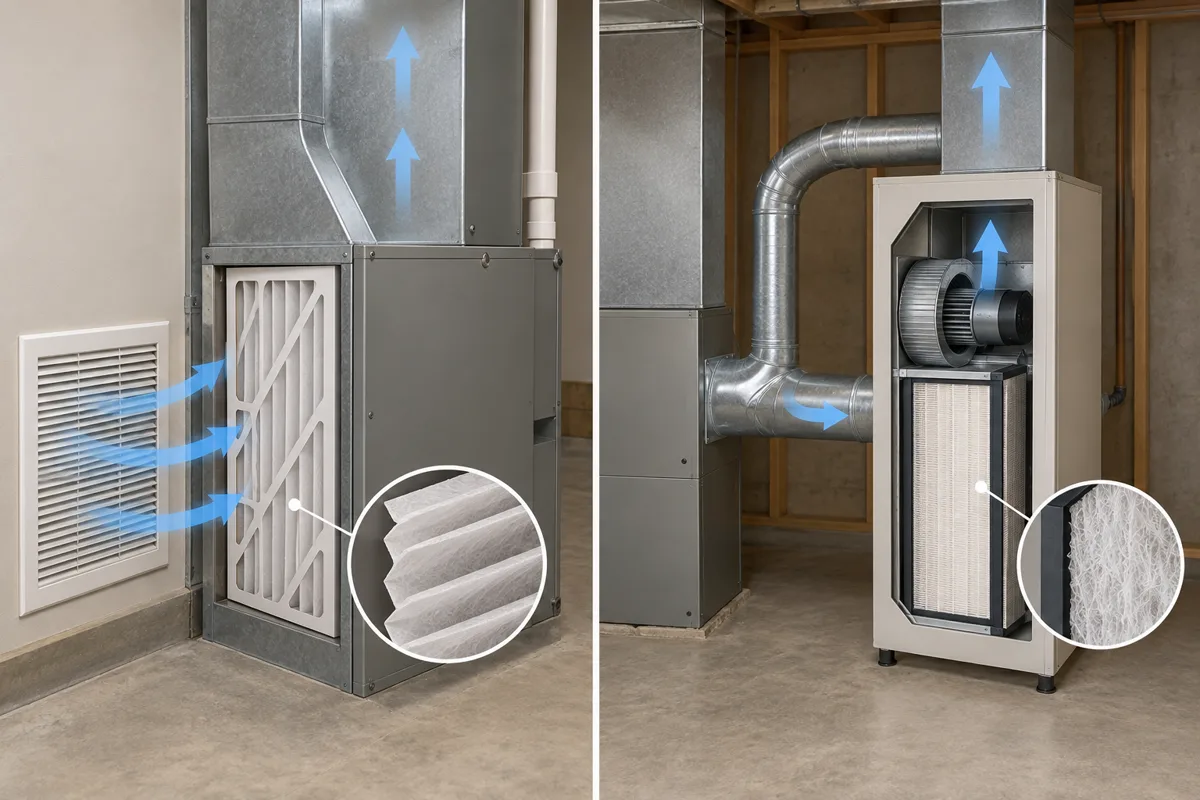
A standard furnace filter rack is designed around particular dimensions and an expected airflow path. True HEPA media may be packaged in a different cabinet, may need more media area, or may be paired with a dedicated blower. Even when a product can be held near the opening, that does not prove the installation is appropriate.
- Dimensions: length, width, and depth must match the intended rack or cabinet.
- Sealing: air that bypasses the media is not filtered to the media's rated performance.
- Pressure drop: the product's resistance at the relevant airflow matters.
- Media area and construction: pleat geometry, depth, and surface area affect how air moves through a specific product.
- System design: the blower, ductwork, filter location, cabinet, and operating airflow all affect the installed result.
The EPA's technical summary on residential air cleaners states that increased-efficiency filters, including HEPA, must be compatible with the existing ducted HVAC system and that added resistance must not impede airflow. It also notes that professional modification may be needed. Compatibility therefore cannot be inferred from marketing language alone.
Can Any Furnace or Central HVAC System Use HEPA Filtration?
Not automatically. Some central systems may support a documented high-efficiency filter or approved accessory. Others may require a separate filtration cabinet, a bypass connection, dedicated ducting, or an independent blower. Some may not be good candidates without broader system changes.
Purpose-built residential HEPA products demonstrate that whole-house HEPA filtration is real. For example, Resideo's documentation for one whole-house HEPA system describes a cabinet containing a prefilter, HEPA filter, carbon filter, and its own motor and blower, with bypass or independently ducted configurations. That example supports the existence of dedicated systems; it does not make that product or arrangement compatible with every furnace.
This is also why equipment age is a poor shortcut. An older furnace is not automatically unable to use HEPA, and a new furnace is not automatically ready for it. The installed filter cabinet, blower and duct system, product specifications, and manufacturer guidance matter more than age alone.
What About Whole-House HEPA Systems?
A whole-house HEPA system may clean a portion of recirculated air through a purpose-built cabinet rather than forcing all return air through a HEPA panel in the ordinary filter slot. Other designs can be independently ducted. These arrangements can supply media area and airflow management that a simple one-inch rack cannot.
They are not homeowner drop-in projects. Do not cut ductwork, fabricate a cabinet, change blower wiring or settings, remove sealed panels, bypass door switches, or alter furnace controls. A trained installer should evaluate the equipment, duct connections, electrical needs, clearances, service access, and the manufacturer's instructions.
Could a HEPA Filter Restrict Furnace Airflow?
A particular product or installation can add too much resistance for a particular system, but “HEPA is always too restrictive” is also too broad. Pressure drop depends on the full filter design, media area, dimensions, airflow rate, loading condition, and cabinet—not the efficiency label alone.
The DOE/PNNL Building America guidance for furnace and air-handler filters advises verifying that pressure drop remains within acceptable limits when a homeowner requests high-MERV or HEPA filtration. That is a system-specific engineering check, not an invitation to use a universal static-pressure number or conduct do-it-yourself testing inside HVAC equipment.
If your concern is ordinary filter resistance, read how an HVAC filter can be too restrictive. That page owns the broader airflow question. A HEPA decision adds the separate issues of performance definition, cabinet and sealing, and whether a purpose-built configuration is required.
Does Filter Depth Solve the Problem?
No. A four-inch filter is not automatically HEPA, just as a one-inch filter is not automatically low efficiency. A deeper product can contain more media area and may manage resistance differently, but depth does not grant a HEPA classification or prove compatibility.
Use the filter-thickness comparison for the tradeoffs among ordinary one-, two-, and four-inch HVAC filters. Never force a deep filter into a shallow rack, leave a cabinet door open, stack filters, or improvise spacers.
What Should You Check Before Changing Filter Type?
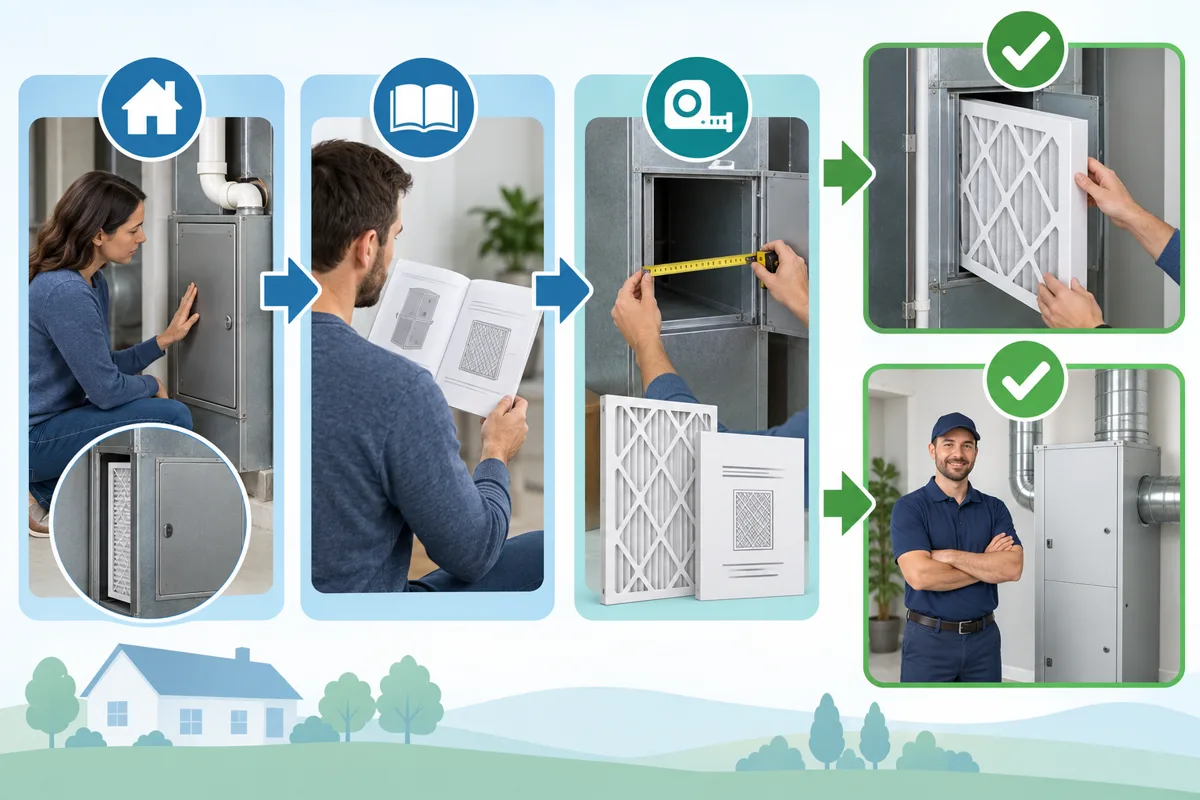
- Identify the present arrangement. Determine whether the filter is in a return grille, equipment slot, deep-media cabinet, electronic cleaner, or another documented location.
- Record the exact filter. Note all three nominal dimensions, available actual dimensions, model information, MERV rating, and airflow direction.
- Read the system documentation. Look for supported filter sizes, cabinets, accessories, efficiency guidance, and installation restrictions.
- Review product-specific data. Do not compare filters by label alone; use the manufacturer's dimensions and pressure-drop information at relevant airflow when available.
- Confirm fit and sealing. A filter should seat as designed without crushing, forcing, or obvious bypass gaps.
- Keep the work within homeowner scope. Do not open sealed equipment, alter controls, wiring, ductwork, burners, gas valves, venting, refrigerant components, or safety devices.
- Get qualified help when the answer is unclear. True HEPA integration can be an equipment and duct-system decision, not merely a filter purchase.
If the printed size is missing or confusing, first verify the air-filter size. Filter Wizard requires the homeowner to confirm physical dimensions; it cannot inspect the cabinet or discover them automatically.
What If You Want Better Filtration Without True HEPA?
For many central forced-air systems, the practical next step is an ordinary HVAC filter at the highest efficiency the system and filter slot are documented to accommodate—not an improvised HEPA conversion. That may be MERV 8, 11, 13, or another supported product depending on the equipment, filter design, dimensions, and household priorities.
Particle filtration is also not the same as gas or odor control. HEPA media targets particles; it does not automatically remove gases, volatile organic compounds, or odors. The smoke-filter guide explains that distinction, while the allergy filter guide keeps filtration claims separate from medical promises.
A portable room air cleaner is another product category, but it is not a substitute for resolving an incompatible or missing central HVAC filter. Compare an HVAC filter with a portable air purifier when the real question is how central and room-level filtration differ; for true HEPA in the HVAC path, the immediate decision remains what the installed system can safely and effectively use.
Free homeowner tool
Using a Compatible Ordinary HVAC Filter?
After you confirm that an ordinary residential filter is appropriate and verify all three physical dimensions, Filter Wizard can offer a cautious MERV starting point and replacement guidance. It does not validate true HEPA equipment or inspect HVAC compatibility.
Open the Filter FinderWhen to Ask an HVAC Professional
Get qualified help when documentation does not clearly support the desired filter; the system uses a specialized media cabinet or electronic cleaner; a new filter does not seat and seal normally; available product data cannot be reconciled with the system airflow; or you are considering a dedicated whole-house HEPA system.
Professional evaluation is also appropriate when weak airflow, unusual noise, repeated shutdowns, short cycling, poor heating or cooling, icing, or filter deformation persists with the documented clean filter installed. Do not assume the filter is the only cause, and do not remove it to test the system.
For electrical, burning, gas, combustion, smoke, or carbon-monoxide concerns, stop and follow the relevant emergency and equipment guidance. HEPA selection is not a substitute for equipment diagnosis or a safety repair.
Filter Wizard Recommendation
Treat true HEPA as a system-compatibility decision, not a stronger version of the same furnace filter. Verify the performance claim, exact dimensions, cabinet, sealing, product pressure drop, airflow, equipment guidance, and installation design. Do not use MERV 13, a four-inch frame, or the age of the furnace as a shortcut.
If the system supports an ordinary residential HVAC filter, choose within that documented path. If true HEPA is the goal, use purpose-built equipment and qualified evaluation where required. The responsible answer can be “yes, with the right designed system,” “no, not in this rack,” or “more system-specific information is needed.”
Filter Wizard recommendation
Choose Only After Compatibility and Size Are Confirmed
For an ordinary compatible HVAC filter, enter a verified three-dimensional size for cautious MERV guidance. Filter Wizard does not determine whether a furnace can accept true HEPA filtration.
Start the Filter FinderFree Filter Reminders
Remember the Next Filter Change
Get occasional filter reminders, homeowner maintenance tips, and buying guidance.
Occasional emails only. Unsubscribe anytime.
You're on the list. We'll send practical filter reminders and updates occasionally.
Frequently Asked Questions
Can you put a HEPA filter in a furnace?
Do not assume a true HEPA filter is a drop-in replacement for a standard furnace filter. The exact filter, cabinet, airflow, pressure drop, blower, and system design must be compatible. Some homes use purpose-built whole-house HEPA equipment rather than a filter inserted into the ordinary rack.
Is MERV 13 the same as HEPA?
No. MERV and HEPA use different performance frameworks. A MERV 13 residential HVAC filter is not automatically HEPA, and a simple HEPA-to-MERV conversion does not establish system compatibility.
Will a HEPA filter restrict furnace airflow?
A particular HEPA filter or filtration arrangement may add resistance, but HEPA should not be declared universally too restrictive. Actual resistance depends on product construction, media area, dimensions, loading, airflow rate, cabinet, and system design.
Can a furnace blower handle a HEPA filter?
That cannot be determined from the word HEPA or the furnace age alone. Check equipment and filtration documentation, product pressure-drop data, the installed cabinet, and qualified system guidance before changing filtration type.
Are there whole-house HEPA systems?
Yes. Purpose-built residential HEPA systems exist, including separately ducted or bypass arrangements with dedicated cabinets and, in some products, their own blower. Their existence does not mean every HVAC system accepts one or that installation is a homeowner retrofit.
Can I replace my normal furnace filter with a HEPA filter?
Only when the exact product and system are documented as compatible. A filter that physically fits may still differ in resistance or sealing, while many standard racks are not designed for true HEPA media.
Is a 4-inch furnace filter a HEPA filter?
Not automatically. Four inches describes filter depth, not particle-efficiency performance. A deep filter can provide more media area, but its rating, construction, fit, and compatibility must still be verified.
What MERV rating is closest to HEPA?
Do not use a single MERV number as a substitute for HEPA. The test frameworks differ, and an apparent conversion does not prove equivalent performance or HVAC compatibility. Use the documented rating and performance data for the actual product.
Do I need a HEPA furnace filter for allergies?
Do not treat HEPA as a medical requirement or guaranteed health treatment. Particle filtration may be one part of indoor-air management, but the installed filter must be compatible and no filter guarantees symptom relief.
Should I use HEPA or a regular HVAC filter?
Use the filtration arrangement supported by the actual system. For many central systems, a compatible ordinary HVAC filter at an appropriate MERV level is the practical path. Consider purpose-built HEPA equipment only after system-specific evaluation.